Buy treatiesofnijmegenmedal.eu ?
We are moving the project
treatiesofnijmegenmedal.eu .
Are you interested in purchasing the domain
treatiesofnijmegenmedal.eu ?
domain@kv-gmbh.de · 0541-91531010
Buy treatiesofnijmegenmedal.eu ?
What is the braking deceleration?
Braking deceleration refers to the rate at which a vehicle slows down when the brakes are applied. It is measured in meters per second squared (m/s^2) and represents the negative acceleration experienced by the vehicle as it comes to a stop. The braking deceleration depends on factors such as the vehicle's mass, the friction between the tires and the road, and the force applied to the brakes. A higher braking deceleration means the vehicle will come to a stop more quickly. **
How do I calculate the deceleration?
To calculate deceleration, you need to determine the change in velocity and the time it takes for that change to occur. Deceleration is calculated by dividing the change in velocity by the time taken for the change to happen. The formula for deceleration is: deceleration = (final velocity - initial velocity) / time. Make sure to use consistent units for velocity and time in your calculation. **

Similar search terms for Deceleration
Top-Angebote
Products related to Deceleration:
-
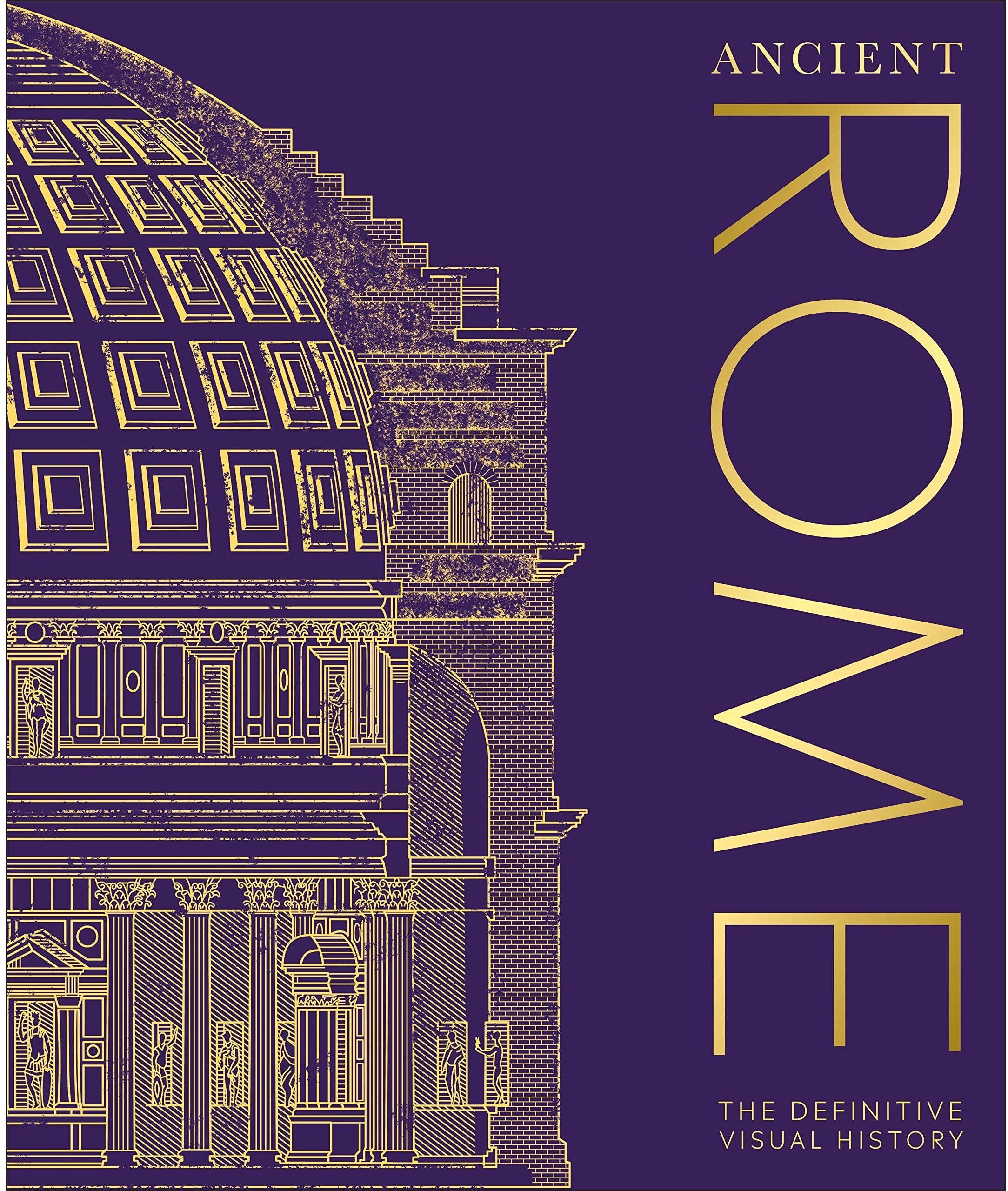
Ancient Rome: The Definitive Visual History (DK Classic History)Immerse yourself in the history of ancient Rome - from its origins as a small settlement on the Palatine Hill to its peak as an empire reigning over 90 million people, and its tumultuous decline. Covering more than 1,000 years of history, and an empire that stretched from Scotland to Syria, Ancient Rome reveals in vivid detail all of the key political, cultural, and military events that shaped the Roman Empire and explores what it was like to live in a society that laid the foundations for many aspects of the modern world. Sumptuous photography and engaging text cover every facet of life in ancient Rome, from art, entertainment, and fashion to engineering, medicine, and war, while detailed maps trace the rise of the mighty Roman Empire. Step back in time in the pages of this history book to discover:- Themed spreads explore developments in areas such as sculpture, religion, warfare, and engineering. - Includes tales of the most dramatic events and battles in Roman history, as well as profiles of influential historical and cultural figures. - An optional 80pp reference section includes sections on rulers, gods and goddesses, and key sites. Featuring Rome's greatest emperors, from Augustus to Constantine, as well as profiles of generals, historians, and influential women, Ancient Rome also delves into the fascinating stories of gladiators, bakers, and enslaved people. The most iconic buildings of Rome are brought to life with specially commissioned CGI recreations, while the stories of ordinary citizens, soldiers, and persecuted groups from across the empire are told with the help of illustrations, artefacts, and eyewitness accounts. Beautifully illustrated and unparalleled in scope, Ancient Rome is the perfect book for anyone who is interested in this defining period of world history.19,95 £*Shipping: 2,99 £Secure redirect to the provider
-
Titan Assassins Creed - The Complete Visual History: The Definitive Visual HistoryThis stunning book explores the rich mythology of Assassins Creed®, featuring the art and history of the series from the first groundbreaking game through the graphic novels to the DLCs. Highlighting the lush and vibrant art that has become a hallmark of the series, this luxury coffee-table book brings the games famous historical locations and figures to life and explores the evolution of each iconic Assassin and Templar.15,99 £*Shipping: 2,99 £Secure redirect to the provider
-
Award-winning Complexion Trio - Skincare & Makeup Kit Charlotte Tilbury 7750 Charlotte's Award-winning Complexion Trio Size:Darlings, unlock a magical 30% OFF* this trio of beauty secrets including my AWARD-WINNING moisturiser for MAGIC skin, my HYDRATING, medium-buildable coverage foundation for a BEAUTIFUL complexion and my AIRbrush setting spray to lock in your look! ONLY available on CharlotteTilbury.com and the Charlotte Tilbury App with a magical 30% saving*, this kit includes: •62,30 £*Shipping: 0,00 £Secure redirect to the provider
-
delilah Cosmetics Award Winning Beauty Heroes TrioPrime, define and enhance any makeup look with this stunning trio of delilah's best selling products. Trio Includes: Under Wear Primer, Colour Enhancing Lip Oil and Brow Line. delilah's Under Wear Primer creates the perfect canvas for any liquid foundation or concealer, instantly smoothing skin texture and prolonging foundation wear. The Lip Saviour, Colour Enhancing Lip Oil is the best selling item in the entire range - it repairs, soothes and nourishes the lips while providing a hint of personalised colour, unique to you! Brow Line in Sable is delilah's best selling shade. The versatile cool brunette tone, shapes, lifts and perfects the brow for a truly professional finish Ingredients: Underwear Primer: Water/Aqua, Dimethicone, Cyclomethicone, Propanediol, Dimethicone Crosspolymer, PVP, Polyacrylamide, Dimethicone/ Vinyl Dimethicone Crosspolymer, Phenoxyethanol, C13-14 Isoparaffin, Butylene Glycol, Laureth-7, Trisodium Ethylenediamine Disuccinate, Ethylhexylglycerin, Parfum, Silica, Magnesium Aluminum Silicate, Tripeptide-3. Lip Saviour: Polybutene, Octyldodecanol, Disostearyl, Malate, Caprylic/capric Triglyceride, C12-15 Alkyl Benzoate, SilicaDimethyl Silylate, Dimethicone, Butyrospermum Parkii Butter / Butyrospermum Parkii (Shea) Butter, Pentaerythrityl,CI 77492 / Iron Oxides, CI 15850 / Red 7, CI 45370 / Orange 5, CI 19140 / Yellow 5 Lake, CI 42090 / Blue 1 Lake. 24m Tetra-di-t-butyl, Hydroxyhydrocinnamate, Tocopheryl Acetate, Aroma / Flavor, Butylene Glycol, Citric Acid, Simmondsia (Castor) Seed Oil, Argania Spinosa Kernel Oil, May Contain (+/-): CI 77891 / Titanium Dioxide, CI 45380 / Red 21, Chinensis Seed Oil / Simmondsia Chinensis (Jojoba) Seed Oil, Ricinus Communis Seed Oil / Ricinus Communis Brow Line in Sable: Hydrogenated Soybean Oil, Hydrogenated Coco-Glycerides, Hydrogenated Vegetable Oil, Zinc Stearate, Stearic Acid, Copernica Cerifera Cera, Polyglycereyl-2- Triisostearate, Tocopherol, Capylyl Glycol, Phenoxyethanol, Ascorbyl Palmitate, Hexylene Glycol [May Contain (+/-): CI 77019 (Mica), CI 77891 (Titanium Dioxide), CI 77491 (Iron Oxide), CI 77492 (Iron Oxide), CI 77499 (Iron Oxide)].48,00 £*Shipping: 0,00 £Secure redirect to the provider



-
How do you calculate the braking deceleration?
To calculate the braking deceleration, you need to know the initial velocity of the object, the final velocity (usually 0 if the object comes to a stop), and the time it takes for the object to come to a stop. The formula to calculate deceleration is: deceleration = (final velocity - initial velocity) / time. By plugging in the values for final velocity, initial velocity, and time into this formula, you can calculate the braking deceleration of the object. **
-
Friction on an inclined plane causes deceleration.
Friction on an inclined plane causes deceleration because it acts in the opposite direction of the object's motion. As the object moves up or down the incline, the friction force opposes its movement, reducing its speed. This deceleration is due to the friction force converting the object's kinetic energy into heat. The steeper the incline or the greater the coefficient of friction, the stronger the deceleration will be. **
-
How does uniform deceleration work in physics?
Uniform deceleration in physics refers to a constant decrease in velocity over time. This means that the object is slowing down at a consistent rate. The rate of deceleration is measured in terms of acceleration, with a negative sign to indicate that it is in the opposite direction of the initial velocity. This can be represented by the equation a = (vf - vi) / t, where a is the acceleration, vf is the final velocity, vi is the initial velocity, and t is the time taken. Uniform deceleration is important in understanding the motion of objects and can be used to calculate stopping distances and braking forces in real-world scenarios. **
-
What is the deceleration of the brakes 2?
The deceleration of brakes 2 is 5 m/s^2. This means that the brakes are slowing down the car at a rate of 5 meters per second squared. A higher deceleration value indicates a stronger braking force, which can help the car come to a stop more quickly. It is important for drivers to be aware of the deceleration of their brakes to ensure safe and efficient stopping. **


How do you calculate the braking deceleration 2?
To calculate the braking deceleration 2, you can use the formula: a = (v_f - v_i) / t, where a is the deceleration, v_f is the final velocity, v_i is the initial velocity, and t is the time taken to decelerate. First, determine the initial and final velocities of the object. Then, measure the time it takes for the object to come to a complete stop. Finally, plug these values into the formula to calculate the braking deceleration 2. **
What is the formula for deceleration in physics?
The formula for deceleration in physics is given by the equation: a = (v - u) / t, where a is the deceleration, v is the final velocity, u is the initial velocity, and t is the time taken. This formula calculates the rate at which an object slows down, or decelerates, over a certain period of time. Deceleration is a negative acceleration, so the value obtained from the formula will be negative, indicating a decrease in velocity. **
Top-Angebote
Products related to Deceleration:
-
York Wallcoverings Diplomacy Weave Blue WallpaperLofted texture and threads of metallic combine to create the illusion of a luxury fabric in pattern Diplomacy Weave. This Diplomacy Weave Wallpaper measures approximately 20.5 inches wide by 33 feet long, covering About 56.4 square feet per roll.204,00 $*Shipping: 0,00 $Secure redirect to the provider
-
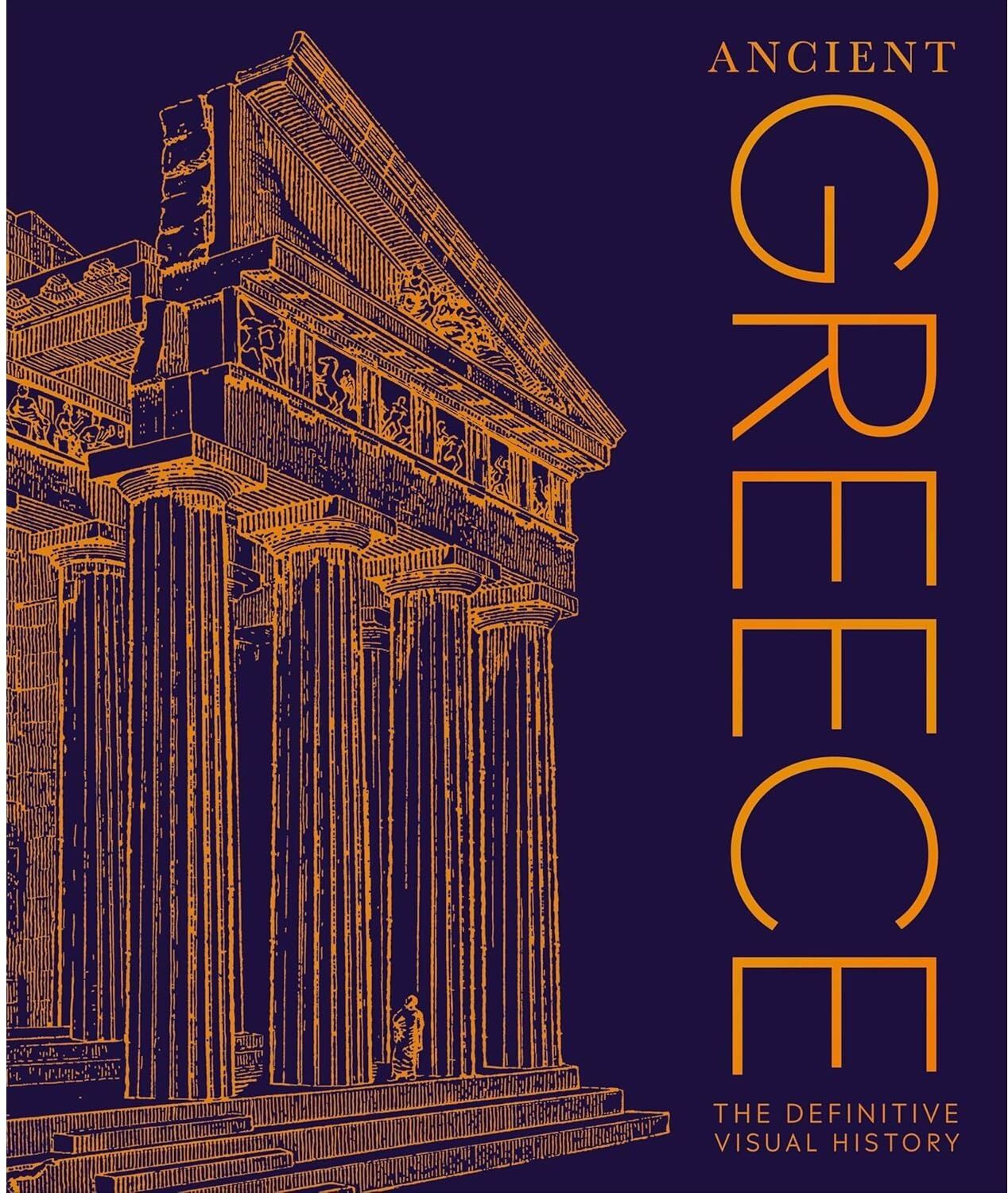
Ancient Greece: The Definitive Visual History (DK Classic History)Embark upon a fascinating journey through ancient Greece – from its rise and fall to its lasting legacy throughout the Western world. Spanning more than 3,000 years, Ancient Greece explores the tumultuous history of this glorious empire in vivid detail – from its Minoan and Mycenaean origins to the apogee of the warring city-states of Athens and Sparta, and from the death of its most charismatic leader, Alexander the Great, to its ultimate defeat by Rome. Sumptuous photography and authoritative, engaging text cover every facet of life in ancient Greece, from art, entertainment, and schools of thought to politics, medicine, and war, while the myths and religious beliefs of the ancient culture are explored and explained in depth. Greece’s military and political power shines through in fascinating maps of its legendary battles. Buried palaces and the Athenian Agora where Plato and Socrates discussed philosophy are brought back to life with stunning CGI artworks. And the stories of everyone from ordinary citizens to lawmakers and the first Olympic athletes are retold through eyewitness accounts and original artefacts.19,99 £*Shipping: 2,99 £Secure redirect to the provider
-
Ancient Rome: The Definitive Visual History (DK Classic History)Immerse yourself in the history of ancient Rome - from its origins as a small settlement on the Palatine Hill to its peak as an empire reigning over 90 million people, and its tumultuous decline. Covering more than 1,000 years of history, and an empire that stretched from Scotland to Syria, Ancient Rome reveals in vivid detail all of the key political, cultural, and military events that shaped the Roman Empire and explores what it was like to live in a society that laid the foundations for many aspects of the modern world. Sumptuous photography and engaging text cover every facet of life in ancient Rome, from art, entertainment, and fashion to engineering, medicine, and war, while detailed maps trace the rise of the mighty Roman Empire. Step back in time in the pages of this history book to discover:- Themed spreads explore developments in areas such as sculpture, religion, warfare, and engineering. - Includes tales of the most dramatic events and battles in Roman history, as well as profiles of influential historical and cultural figures. - An optional 80pp reference section includes sections on rulers, gods and goddesses, and key sites. Featuring Rome's greatest emperors, from Augustus to Constantine, as well as profiles of generals, historians, and influential women, Ancient Rome also delves into the fascinating stories of gladiators, bakers, and enslaved people. The most iconic buildings of Rome are brought to life with specially commissioned CGI recreations, while the stories of ordinary citizens, soldiers, and persecuted groups from across the empire are told with the help of illustrations, artefacts, and eyewitness accounts. Beautifully illustrated and unparalleled in scope, Ancient Rome is the perfect book for anyone who is interested in this defining period of world history.19,95 £*Shipping: 2,99 £Secure redirect to the provider
-
Titan Assassins Creed - The Complete Visual History: The Definitive Visual HistoryThis stunning book explores the rich mythology of Assassins Creed®, featuring the art and history of the series from the first groundbreaking game through the graphic novels to the DLCs. Highlighting the lush and vibrant art that has become a hallmark of the series, this luxury coffee-table book brings the games famous historical locations and figures to life and explores the evolution of each iconic Assassin and Templar.15,99 £*Shipping: 2,99 £Secure redirect to the provider
-
What is the braking deceleration?
Braking deceleration refers to the rate at which a vehicle slows down when the brakes are applied. It is measured in meters per second squared (m/s^2) and represents the negative acceleration experienced by the vehicle as it comes to a stop. The braking deceleration depends on factors such as the vehicle's mass, the friction between the tires and the road, and the force applied to the brakes. A higher braking deceleration means the vehicle will come to a stop more quickly. **
-
How do I calculate the deceleration?
To calculate deceleration, you need to determine the change in velocity and the time it takes for that change to occur. Deceleration is calculated by dividing the change in velocity by the time taken for the change to happen. The formula for deceleration is: deceleration = (final velocity - initial velocity) / time. Make sure to use consistent units for velocity and time in your calculation. **
-
How do you calculate the braking deceleration?
To calculate the braking deceleration, you need to know the initial velocity of the object, the final velocity (usually 0 if the object comes to a stop), and the time it takes for the object to come to a stop. The formula to calculate deceleration is: deceleration = (final velocity - initial velocity) / time. By plugging in the values for final velocity, initial velocity, and time into this formula, you can calculate the braking deceleration of the object. **
-
Friction on an inclined plane causes deceleration.
Friction on an inclined plane causes deceleration because it acts in the opposite direction of the object's motion. As the object moves up or down the incline, the friction force opposes its movement, reducing its speed. This deceleration is due to the friction force converting the object's kinetic energy into heat. The steeper the incline or the greater the coefficient of friction, the stronger the deceleration will be. **
Similar search terms for Deceleration
-
Award-winning Complexion Trio - Skincare & Makeup Kit Charlotte Tilbury 7750 Charlotte's Award-winning Complexion Trio Size:Darlings, unlock a magical 30% OFF* this trio of beauty secrets including my AWARD-WINNING moisturiser for MAGIC skin, my HYDRATING, medium-buildable coverage foundation for a BEAUTIFUL complexion and my AIRbrush setting spray to lock in your look! ONLY available on CharlotteTilbury.com and the Charlotte Tilbury App with a magical 30% saving*, this kit includes: •62,30 £*Shipping: 0,00 £Secure redirect to the provider
-
delilah Cosmetics Award Winning Beauty Heroes TrioPrime, define and enhance any makeup look with this stunning trio of delilah's best selling products. Trio Includes: Under Wear Primer, Colour Enhancing Lip Oil and Brow Line. delilah's Under Wear Primer creates the perfect canvas for any liquid foundation or concealer, instantly smoothing skin texture and prolonging foundation wear. The Lip Saviour, Colour Enhancing Lip Oil is the best selling item in the entire range - it repairs, soothes and nourishes the lips while providing a hint of personalised colour, unique to you! Brow Line in Sable is delilah's best selling shade. The versatile cool brunette tone, shapes, lifts and perfects the brow for a truly professional finish Ingredients: Underwear Primer: Water/Aqua, Dimethicone, Cyclomethicone, Propanediol, Dimethicone Crosspolymer, PVP, Polyacrylamide, Dimethicone/ Vinyl Dimethicone Crosspolymer, Phenoxyethanol, C13-14 Isoparaffin, Butylene Glycol, Laureth-7, Trisodium Ethylenediamine Disuccinate, Ethylhexylglycerin, Parfum, Silica, Magnesium Aluminum Silicate, Tripeptide-3. Lip Saviour: Polybutene, Octyldodecanol, Disostearyl, Malate, Caprylic/capric Triglyceride, C12-15 Alkyl Benzoate, SilicaDimethyl Silylate, Dimethicone, Butyrospermum Parkii Butter / Butyrospermum Parkii (Shea) Butter, Pentaerythrityl,CI 77492 / Iron Oxides, CI 15850 / Red 7, CI 45370 / Orange 5, CI 19140 / Yellow 5 Lake, CI 42090 / Blue 1 Lake. 24m Tetra-di-t-butyl, Hydroxyhydrocinnamate, Tocopheryl Acetate, Aroma / Flavor, Butylene Glycol, Citric Acid, Simmondsia (Castor) Seed Oil, Argania Spinosa Kernel Oil, May Contain (+/-): CI 77891 / Titanium Dioxide, CI 45380 / Red 21, Chinensis Seed Oil / Simmondsia Chinensis (Jojoba) Seed Oil, Ricinus Communis Seed Oil / Ricinus Communis Brow Line in Sable: Hydrogenated Soybean Oil, Hydrogenated Coco-Glycerides, Hydrogenated Vegetable Oil, Zinc Stearate, Stearic Acid, Copernica Cerifera Cera, Polyglycereyl-2- Triisostearate, Tocopherol, Capylyl Glycol, Phenoxyethanol, Ascorbyl Palmitate, Hexylene Glycol [May Contain (+/-): CI 77019 (Mica), CI 77891 (Titanium Dioxide), CI 77491 (Iron Oxide), CI 77492 (Iron Oxide), CI 77499 (Iron Oxide)].48,00 £*Shipping: 0,00 £Secure redirect to the provider
-
Fox Eye Publishing Introduction to History 20 Books Collection Box Set – Educational History Learning CollectionIntroduction to History 20 Books Collection Box Set (The Aztecs, Castles, Celts, Ancient China, Discovering the Past, Egyptians, Ancient Greeks, The Maya, Romans, Vikings, Great Explorers and More) Books in This Collection: Introduction to The Aztecs Introduction to Castles Introduction to Celts Introduction to Ancient China Introduction to Discovering the Past Introduction to Egyptians Introduction to Ancient Greeks Introduction to The Maya Introduction to Romans Introduction to Vikings Introduction to Great Explorers Introduction to Great Inventors Introduction to Great Scientists Introduction to Industrial Revolution Introduction to Kingdoms of the Past Introduction to Mysterious Tombs and Treasures Introduction to Strange Places Introduction to The Victorians Introduction to World War I Introduction to World War II12,99 £*Shipping: 2,99 £Secure redirect to the provider
-
York Wallcoverings Diplomacy Weave Pearl WallpaperLofted texture and threads of metallic combine to create the illusion of a luxury fabric in pattern Diplomacy Weave. This Diplomacy Weave Wallpaper measures approximately 20.5 inches wide by 33 feet long, covering About 56.4 square feet per roll.204,00 $*Shipping: 0,00 $Secure redirect to the provider
-
How does uniform deceleration work in physics?
Uniform deceleration in physics refers to a constant decrease in velocity over time. This means that the object is slowing down at a consistent rate. The rate of deceleration is measured in terms of acceleration, with a negative sign to indicate that it is in the opposite direction of the initial velocity. This can be represented by the equation a = (vf - vi) / t, where a is the acceleration, vf is the final velocity, vi is the initial velocity, and t is the time taken. Uniform deceleration is important in understanding the motion of objects and can be used to calculate stopping distances and braking forces in real-world scenarios. **
-
What is the deceleration of the brakes 2?
The deceleration of brakes 2 is 5 m/s^2. This means that the brakes are slowing down the car at a rate of 5 meters per second squared. A higher deceleration value indicates a stronger braking force, which can help the car come to a stop more quickly. It is important for drivers to be aware of the deceleration of their brakes to ensure safe and efficient stopping. **
-
How do you calculate the braking deceleration 2?
To calculate the braking deceleration 2, you can use the formula: a = (v_f - v_i) / t, where a is the deceleration, v_f is the final velocity, v_i is the initial velocity, and t is the time taken to decelerate. First, determine the initial and final velocities of the object. Then, measure the time it takes for the object to come to a complete stop. Finally, plug these values into the formula to calculate the braking deceleration 2. **
-
What is the formula for deceleration in physics?
The formula for deceleration in physics is given by the equation: a = (v - u) / t, where a is the deceleration, v is the final velocity, u is the initial velocity, and t is the time taken. This formula calculates the rate at which an object slows down, or decelerates, over a certain period of time. Deceleration is a negative acceleration, so the value obtained from the formula will be negative, indicating a decrease in velocity. **
* All prices are inclusive of VAT and, if applicable, plus shipping costs. The offer information is based on the details provided by the respective shop and is updated through automated processes. Real-time updates do not occur, so deviations can occur in individual cases. ** Note: Parts of this content were created by AI.